Read about HLS Beyond in Harvard Law Today
Copyright in AI Outputs: Who Owns AI-Created Works?
HLS Professors Christopher Bavitz & Rebecca Tushnet & BU Law School Professo, Jessica Silbey
Wednesday, April 22nd, 12:20-1:20, Langdell 232/3 – REGISTER HERE

Generative AI can produce striking images and polished text in seconds, but copyright still turns on a basic question: did a human author do enough? At this panel discussion, Professors Bavitz, Tushnet, and Silbey will discuss the copyright issues implicated by Generative Artificial Intelligence tools and training of large language models, focusing on the copyright status of AI outputs. The Supreme Court’s recent decision to deny certiorari Thaler v. Perlmutter lets stand the D.C. Circuit’s decision, which in turn endorsed the Copyright Office’s decision not to issue a registration to computer-generated artwork. The panelists will unpack questions about human authorship and originality and how those requirements apply to AI-assisted outputs. They will map the core legal arguments about whether a “prompter” can ever qualify as an author, what kinds of human contributions might support protection, and what questions remain open for courts, the Copyright Office, and Congress. Registration Required. Lunch will be provided.
Am AI Okay?
Dan Be Kim (CDT), Monday, April 20th, 12:20-1:20, Langdell 232/3 – REGISTER HERE

As AI becomes a part of our academic, personal, and professional lives, many of us are quietly navigating our relationship to it — deciding how to use it responsibly, when to lean in, when to hold back, and how to stay aligned with our values along the way. Whether we’re using AI for personal, academic, or professional tasks, the feelings we have about using it come from many places – our peers, our affiliated institutions, our professional colleagues, as well as our own sense of humanity. According to research produced by the Center for Digital Thriving (CDT), acknowledging the underpinnings of these feelings – often characterized by secrecy and shame – can help us navigate to a more clear-sighted engagement with the technology. In this session, led by fellow Dan Be Kim from the CDT, you’ll work through an exercise both individually and collectively designed to help make our inner experiences with AI more visible and explicit. Focusing not only on what AI does for us, but also on what AI does to us — shaping our habits and decision-making — you’ll leave with an approach to AI informed by a greater awareness and intention in your personal and professional lives. Registration Required. Lunch will be provided.
Evidence-Based AI Policy
TechReg Series on AI w/ Professor Alan Raul – (February 19th, March 12th, April 9th)
Professor Alan Raul, Thursday, April 9th, 12:20-1:20pm, Langdell 232/3
In this third and final session of the TechReg in AI series with Professor Alan Raul (see February 19th and March 12th events), we consider what constitutes an “AI incident” for policy and governance purposes. Who is monitoring and reporting them? How does the “incident” concept account for AI systems performing as intended versus those that are malfunctioning, maliciously compromised, or acting in novel or unexpected manners? And how are “big” societal, or systemic, risks characterized and tracked differently from individual-level risks? Sara Rendtorff-Smith, from the Organization for Economic Cooperation and Development (OECD), will join our session to discuss how her team conceives of and operates the OECD’s AI risk monitor. (Read more at https://oecd.ai/en/incidents). Come join the discussion and help us explore today’s incident-monitoring ecosystem! We’ll discuss relevant challenges such as underreporting, ambiguous or conflicting definitions, and how to correlate scattered, anecdotal events into meaningful evidence for policymakers, risk management and harm prevention. Registration Required. Lunch will be provided. This series is co-sponsored by the Berkman Klein Center (BKC).
Smart Money: Using AI for Financial Decision Making
Derek Brainard of AccessLex, Tuesday, April 7th, 12:20-1:20, Langdell 232/3
Harness the power of artificial intelligence to transform the way you approach making financial decisions and accessing information. From personalized budgeting tools to interactive debt management simulations and investing modeling, this session will reveal cutting-edge ways to demystify complex financial topics. Discover how AI can provide you with the insights you need to make informed financial decisions, all while saving you time. Lead by Derek Brainard of Accesslex. This session is brought to you jointly by SFS and HLS Beyond. Registration Required. Lunch will be provided.
Ukulele for Beginners
Jonathan Hostottle (’27), Thursday, April 2nd, 4:00-5:30pm, Langdell 232/3

Take a break from studying to learn how to make some music! In this session, Jonathan Hostottle (’27) will teach you the basics of playing the ukulele. We will go over basic chords, strumming patterns, and all of the fundamentals needed to learn and play some of your favorite songs. No ukulele experience is required. Beginners to experienced players are welcome! The first 15 students to register (attendance required) will get a ukulele to take home. Otherwise, bring your own, purchase one HERE, or for one of slightly higher quality (for your budding ukulele playing career) support your local Guitar Stop, right up the street at 1760 Mass Ave! Registration Required.
Why I Changed My Mind
HLS Faculty Panel, Tuesday, March 31st, 12:20-1:20, WCC 2019 Milstein West A – Watch the Video
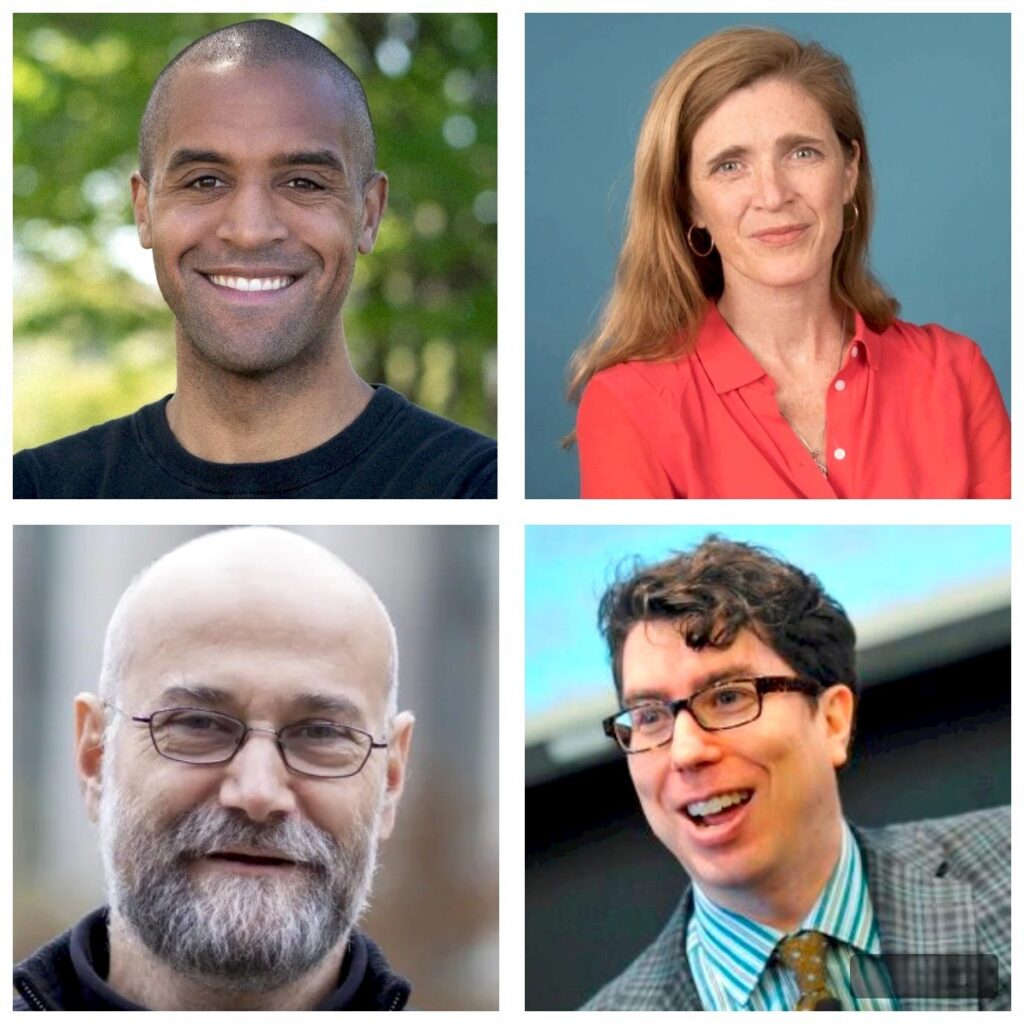
Back by popular demand, a fifth iteration of the faculty panel Why I Changed My Mind featuring HLS faculty members’ stories of professional moments of reckoning when ideas they had previously thought settled in their worldview changed. Though (ideally) academia is a place where revising one’s ideas is a constant, in reality getting something ‘wrong’ (for students and professors) can be scary. In the current cultural climate it often feels that there is less and less room for the notion that one’s ideas can (and should!) evolve over time as new arguments, information and data emerge. Faculty speakers will demonstrate this process in action as they share their stories on a panel moderated by Jonathan Zittrain, George Bemis Professor of International Law. Lunch will be provided. Featuring:
- Yochai Benkler, Berkman Professor of Entrepreneurial Studies
- Nikolas Bowie, Louis D. Brandeis Professor of Law
- Samantha Power, William D. Zabel ’61Professor of Practice in Human Rights
HLS Tiny Desk Concert
HLS Students Play, Thursday, March 26th, 6-8:00pm, Langdell’s Fishman Room
Come relax and enjoy watching your fellow HLS student musicians perform acoustic sets of their favorite pieces – classical, jazz, and pop! We’ll provide the snacks and the atmosphere; you bring the love – all together we’ll make a little joy as spring unfolds before us. Put your books down for a sec and join us in the Fishman room. Registration Required
AI At War: The Anthropic-Pentagon Clash
TechReg Series on AI w/ Professor Alan Raul – (February 19th, March 12th, April 9th)
Professor Alan Raul, Thursday, March 12th, 12:20-1:20pm, Langdell 232/3
In this second session of the TechReg in AI series w/ Professor Alan Raul (see February 19th and April 9th) we explore the VERY current struggle unfolding between Anthropic and the Pentagon over the control of and uses of AI in defense. Anthropic CEO Dario Amodei and US “Secretary of War” Pete Hegseth are at war over who governs the governance of AI. The dispute centers around the CEO’s refusal to allow the military to use Anthropic’s AI for any lawful use. Amodei would prohibit deployment for mass surveillance or for fully autonomous weapons (for ethical and safety reasons). Secretary Hegseth and President Trump were furious, and the Pentagon declared Anthropic to be a “supply chain risk,” effectively barring other government contractors from using Anthropic in their own contracts. Secretary Hegseth also threatened to invoke the Defense Production Act to compel the company to provide AI systems to the government that it could deploy at its sole discretion. Naturally, Anthropic’s competition swarmed, the U.S. projected force, and Amodei regrouped. Please come and join in the discussion! Registration Required. Lunch will be provided. This series is co-sponsored by the Berkman Klein Center (BKC).
Ethical AI for Lawyers
Dharma Frederick (’06) & Barbara Taylor of DLA Piper, Wednesday, March 11th, 12:20-1:20, Langdell 232/3
Dharma Frederick (’06) and Barbara Taylor lead this session on Ethical AI based on a new CLE requirement for lawyers at DLA Piper, designed in collaboration with Casetext. Between “robot lawyers” and sanctions from judges for misuse of AI, it can be hard to navigate this powerful new tool. At this workshop you will learn about real, trustworthy applications of generative AI, including legal research, document review, and contract analysis. Learn how to distinguish between responsible and irresponsible uses of AI and discern how to apply existing legal ethics requirements to generative AI. REGISTRATION REQUIRED. Lunch will be provided.
How to Use Word Like a Lawyer
Debbie Ginsberg, Monday, March 2nd, 12:20-1:20pm, Langdell 232/3

Getting ready to write your appellate brief this spring but have no real idea how to format it properly? Come get help from our faculty research librarian, Debbie Ginsberg, who specializes in leveraging technology for all things law! She’ll cover using styles, creating a table of contents, adding Roman and Arabic numbers to the same document, and creating a table of authorities. If you have other questions about how to effectively use Word in your legal research and writing, she’s the one to ask. So bring your laptops, your questions, and your appetites and get these skills under your belt before you need to turn anything in! Registration Required. Lunch will be provided.
Mastering the Maze of Student Loan Repayment
Derek Brainard of AccessLex, Wednesday, February 25th, 12:20-1:20, Langdell 232/3
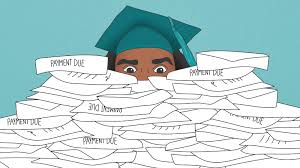
Are you finding it challenging to stay updated with the latest developments in student loan repayment and forgiveness programs? Join us for an in-depth exploration of upcoming changes to the standard repayment plan, income-driven repayment plans, the Public Service Loan Forgiveness program, and how private loan repayment will impact broader financial planning. Attendees will leave with actionable strategies for integrating these updates into their student loan repayment strategy after graduation. Registration Required. Lunch will be provided. HLS Beyond has partnered with SFS to bring you this workshop!
Where do Things Stand With the White House AI Action Plan?
TechReg Series on AI w/ Professor Alan Raul – (February 19th, March 12th, April 9th)
Professor Alan Raul, Thursday February 19th, 3:45-5:00pm, Langdell 232/3
Professor Alan Raul will be leading 3 sessions this spring on TechReg in AI under the Trump administration (see March 12th & April 9th events). This first session will examine the current U.S. federal AI governance landscape under the Trump Administration’s July 2025 AI Action Plan and December 2025 Executive Order 14365 (“Ensuring a National Policy Framework for Artificial Intelligence”), including the Administration’s posture toward the emerging web of state AI laws. Up for discussion are the state-of-play of the Action Plan’s three pillars – Innovation, Infrastructure and International Leadership. What has been announced and what has been implemented? How are the Administration’s “whole-of-government” priorities being executed in procurement, regulatory or governance standards, energy and data center initiatives, national security measures, research funding, and international diplomacy? What policy choices are still in flux? How will the U.S. approach to “responsible acceleration” shape the future of AI development and safety? We will focus on the Office of Science and Technology Policy (OSTP) and Office of Management and Budget (OMB) in the White House and the Center for AI Standards and Innovation (CAISI) in the Department of Commerce. Registration Required. Afternoon snacks will be provided. This series is co-sponsored by the Berkman Klein Center (BKC).
Funders and Founders
Pablo Arredondo & HLS Visiting Professor Jon Choi, Wednesday February 11th, 12:20-1:20, Langdell 232/3
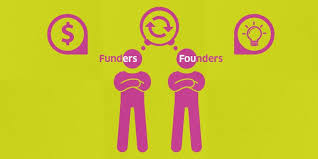
What does it take to build a legal tech startup? How are lawyers using AI now, and how will they use it five and ten years from now? Join Pablo Arredondo, Co-Founder of CaseText and now Vice President at Thomson Reuters following the company’s 2023 acquisition, in conversation with Jon Choi, visiting faculty at HLS and James Carr Professor of Law at Washington University in St. Louis and Co-Founder of Solomon AI, as they discuss entrepreneurship, AI, and the future of the legal profession. From finding the right idea, to securing early funding, to scaling AI products that lawyers actually use, this conversation will pull back the curtain on how legal tech actually works. Whether you’re considering founding a startup or are curious about how AI is reshaping legal practice, come join the discussion. Registration Required. Lunch will be provided. This event is co-sponsored by BKC and the Library Innovation Lab (LIL)
The Antitrust Implications of Technology Regulation
Dr. Katri Nousiainen & Benjamin N. Waber (MIT Media Lab), Thursday, Nov 13th, 12:20-1:20pm, Langdell 232/3
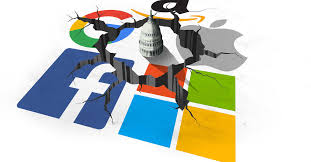
Though technology regulation has traditionally been treated separately from antitrust concerns, panelists in this session argue that the current antitrust regimes and regulatory practices in the US and the EU have worked together to stifle competition and innovation. By protecting incumbents with compliance costs that disproportionately burden new entrants, consilidating market power through the control of proprietary data, and creating innovation bottlenecks in the failure to keep pace with rapid technological shifts, competition and innovation are effectively hindered. Exploring the critical tension between fostering innovation and mitigating risks, panelists will discuss the need to establish new regulations that strike a balance between these two concerns with an international legal standard and shared regulatory framework to guide competitive, responsible progress. Bring your perspectives, your curiosity, and your appetite for what promises to be a lively lunchtime discussion. REGISTRATION REQUIRED. Lunch will be provided.
As AI becomes a part of our academic, personal, and professional lives, many of us are quietly navigating our relationship to it — deciding how to use it responsibly, when to lean in, when to hold back, and how to stay aligned with our values along the way. Whether we’re using AI for personal, academic, or professional tasks, the feelings we have about using it come from many places – our peers, our affiliated institutions, our professional colleagues, as well as our own sense of humanity. According to research produced by the Center for Digital Thriving (CDT), acknowledging the underpinnings of these feelings – often characterized by secrecy and shame – can help us navigate to a more clear-sighted engagement with the technology. In this session, led by fellow Dan Be Kim from the CDT, together you’ll work through a series of short exercises designed to help make our inner experiences with AI more visible and explicit. Focusing not only on what AI does for us, but also on what AI does to us — shaping our habits, pressures, and decision-making, both individually and collectively — you’ll leave with an approach to AI informed by a greater awareness and intention in your personal and professional lives. Registration Required. Lunch will be provided.
New Developments in Quantum Computing
Allen Chiu & Elias Trapp, Monday, November 3rd, 12:20-1:20, Langdell 232/3

The development of quantum computers has seen rapid progress in recent years, with global players like Google, IBM and academic labs from Harvard and MIT competing to drive innovation. Amidst this race, multiple different platforms and techniques for achieving scalable, robust quantum computation have emerged. Come hear about the amazing breakthrough recently achieved in Mikhail Lukin’s Group (Quantum Optics Laboratory) who, along with MIT scientists, are developing technologies based on ultracold neutral atoms. They will discuss the unique advantages and drawbacks of this platform, highlight one of the last remaining challenges towards scalable neutral-atom quantum computing, and outline how their recent work published in Nature Magazine on the continuous operation of a defect-free array of 3,000 qubits – a world record – addresses this challenge. Who DOESN’T want to know more about where quantum technologies are going? Please join us for lunch and what will surely be a fascinating discussion. Registration Required.
America & Its Universities Need a New Social Contract
Danielle Allen, Wednesday, October 29th, 12:20-1:20, Langdell 232/3
Professor Danielle Allen, who, in addition to her other roles at Harvard, penned a column at the Washington Post on Constitutional Democracy from 2008-2024, believes that the current times call for a new social contract between America and its universities. Her recent article in The Atlantic explores the history of how government and university research became intertwined, what that relationship has produced since 1945, but also what was missing in that vision that has led higher education into the vulnerable territory it now finds itself. Facing a decline in trust by the public as well as the challenges posed by the Trump administration, she proposes that a new social contract which makes central a firm educational foundation in Civic Strength is what these times call for. Come learn about her proposals for just what that new social contract might look like for the future of higher education in the United States. Registration Required. Lunch will be provided.
Current AI Tools for Lawyers – A Workshop
Debbie Ginsberg, HLS Research Librarian, Monday, October 20th & November 17th, 12:20-1:20pm, Langdell 232/3

Bring your laptops and your appetite and join Debbie Ginsberg of HLSL’s Research Services team for a demonstration of the AI tools currently available to law students. Law students at Harvard have access to many AI research products – from Lexis Protege to Chat GPT. We’ll explore these products together LIVE and discover what their strengths are as well as their limitations. We’ll examine AI products from Lexis, Westlaw, Bloomberg, and the HU Sandbox. Since we’ll be conducting hands-on demonstrations, be sure that your database passwords are working! If you are an HLS student and you don’t have access to Lexis, Westlaw, and Bloomberg, please contact [email protected]. Lunch will be provided. REGISTRATION REQUIRED
Tariffs and the Economy – How Intertwined Are They?
Jason Furman & Mark Wu, Thursday, October 9th, 12:20-1:20pm, Austin 111 West
Watch the video
Late this summer, economics Professor Jason Furman wrote an essay in the NYT entitled “The Tariffs Kicked In. The Sky Didn’t Fall. Were the Economists Wrong?.” Given that imported goods account for (only) 11% of G.D.P., he proffers that the complexities of the U.S. economy– its sheer size and momentum, range of sectors, behavior of businesses and consumers, and variety of factors that affect the stock market– may insulate us to some degree from the shocks of such a dramatic shift in international trade policy. In assessing the actual effects of tariffs on the economy, he suggests that economists, himself included, may suffer from ‘tariff derangement syndrome’, wherein they find themselves disproportionately worked up every time tariffs are increased. Given the one constant factor currently affecting the U.S. economy–– uncertainty – HLS professor of international trade law and policy, Mark Wu, will engage with Professor Furman on the current state of tariff policy and its effects on the U.S. economy. Come with your questions and be a part of what will likely prove a lively discussion. Lunch will be provided. Registration Required
Connecting Across Difference with a Game Called Tango
Professor Joshua Greene, Wednesday, October 8th, 12:20-1:20pm, Pound Hall 101 (Ballantine Classroom)
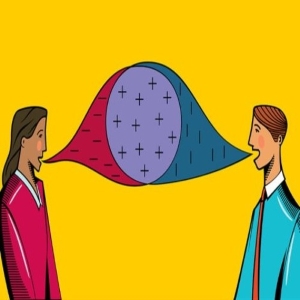
HKS political scientist and co-director of the Crowd Counting Consortium, Erica Chenoweth, and Research Project Manager at the Nonviolent Action Lab, Soha Hammam, have been keeping track of when, where, and how civilian protests are occurring in the U.S in response to the major policy shifts introduced by the current administration. Despite popular perception, their research has shown that in contrast to the mass marches of 2017, protests are far more numerous and frequent but, given the current political realities, have also shifted to more powerful forms of resistance. Economic noncooperation – withholding labor power and purchasing power – appear to be a strategic and more viable method given uncertainty about the respect for First Amendment rights, the weaponization of government against political opponents, and the increasingly surveilled and high-risk nature of in person protest. Come learn about their current research in the context of democratic movements throughout the world which, they argue, is proving to be “savvy, diversifying and probably just getting started.” Lunch will be provided. Registration Required.
Non-Cooperation & Protest in the Trump Era
Erica Chenoweth & Soha Hammam, Thursday, October 2nd, 12:20-1:20pm, Langdell 232/3
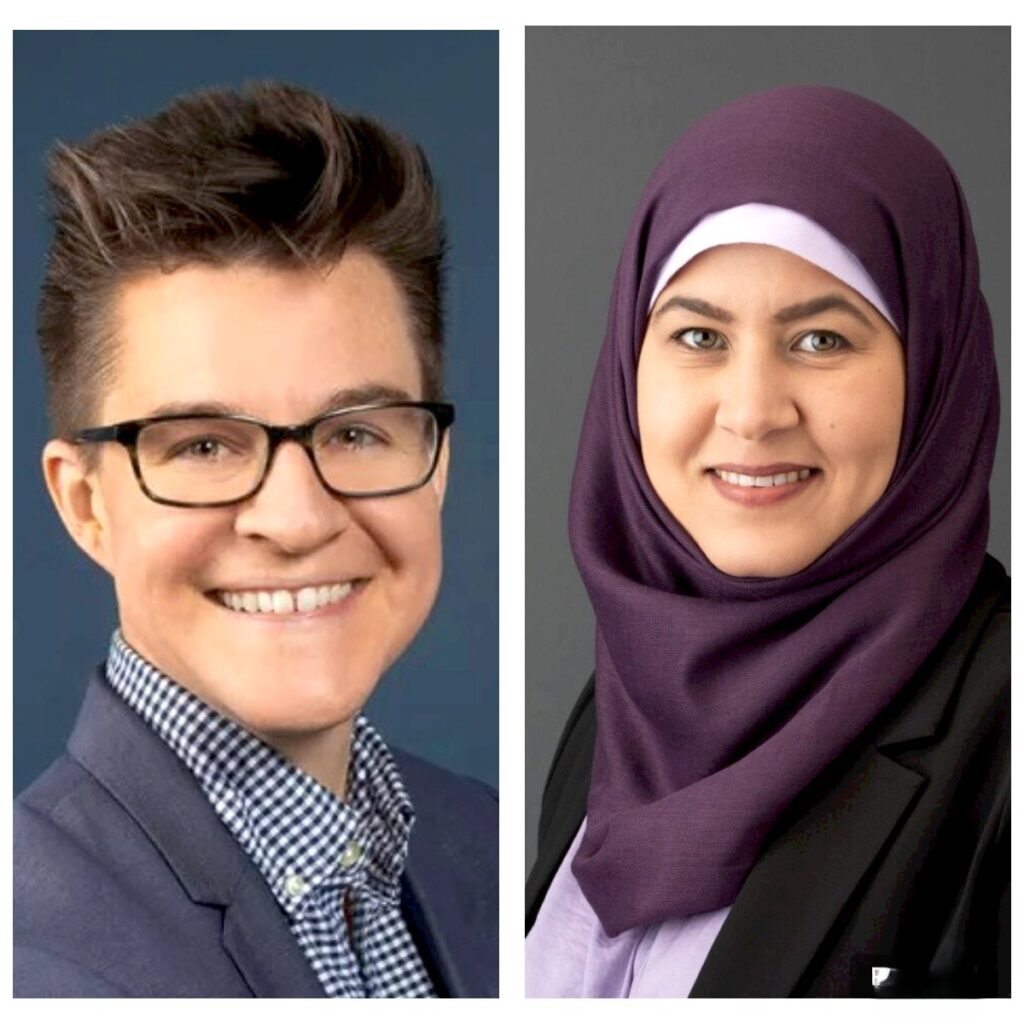
HKS political scientist and co-director of the Crowd Counting Consortium, Erica Chenoweth, and Research Project Manager at the Nonviolent Action Lab, Soha Hammam, have been keeping track of when, where, and how civilian protests are occurring in the U.S in response to the major policy shifts introduced by the current administration. Despite popular perception, their research has shown that in contrast to the mass marches of 2017, protests are far more numerous and frequent but, given the current political realities, have also shifted to more powerful forms of resistance. Economic noncooperation – withholding labor power and purchasing power – appear to be a strategic and more viable method given uncertainty about the respect for First Amendment rights, the weaponization of government against political opponents, and the increasingly surveilled and high-risk nature of in person protest. Come learn about their current research in the context of democratic movements throughout the world which, they argue, is proving to be “savvy, diversifying and probably just getting started.” Lunch will be provided. Registration Required.
The Oldest Constitutional Question: Enumeration & Federal Power
Richard Primus & Noah Feldman, Monday, September 15th, 12:20-1:20pm, Austin 111 West
Watch the video
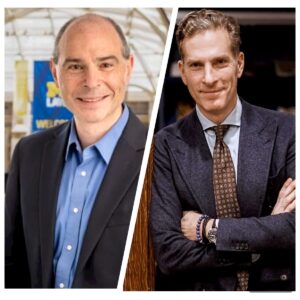
Every law student learns that the federal government is constrained to act only according to its enumerated powers, meaning that Congress can do what the Constitution expressly authorizes it to and nothing more. Law Professor and author, Richard Primus, contends in his important new book, The Oldest Constitutional Question, that this long standing orthodoxy—allegedly required by the text of the Constitution, the Framers’ vision, and the logic of federalism—is fundamentally flawed. Come join a discussion between Professors Noah Feldman and Primus on whether the enumeration of powers is not, and never has been, a sensible means for creating and enforcing limits on Congress. Lunch will be provided.